June Hastings Collections
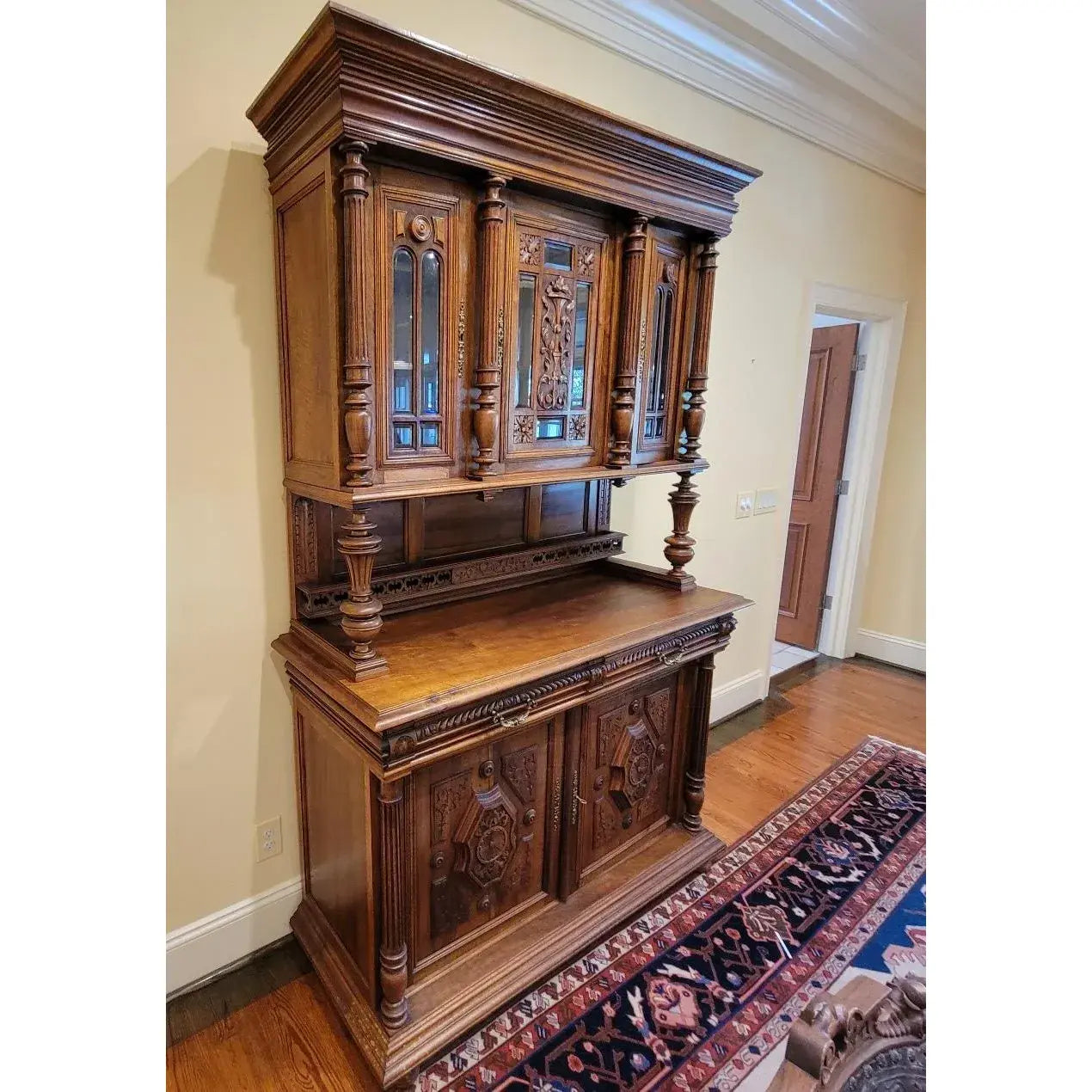
19th Century Belgian Carved Walnut Hunting Cupboard, Architectural Renaissance Revival Cabinet, Belgium, Circa 1880
19th Century Belgian Carved Walnut Hunting Cupboard, Architectural Renaissance Revival Cabinet, Belgium, Circa 1880
Couldn't load pickup availability
SOLD A monumental 19th-century Belgian carved walnut hunting cupboard of Renaissance Revival inspiration, crafted circa 1880. Richly detailed yet beautifully balanced in proportion, this statement cabinet combines sculptural carving, architectural structure, and exceptional storage, making it equally suited to a dining room, library, or dramatic entry hall.
Description
This impressive Belgian cupboard reflects the strong Northern European tradition of late 19th-century craftsmanship, when furniture makers revived Renaissance forms with remarkable technical skill and artistic ambition.
Constructed in solid walnut with a warm, deeply figured surface, the cabinet is organized in classical architectural tiers. The upper vitrine is framed by turned columns and paneled doors with carved foliate ornament, allowing display while maintaining visual rhythm across the façade. Below, a generous serving surface rests above a substantial sideboard fitted with deeply carved panels and concealed storage.
The design draws directly from historic Flemish and hunting lodge interiors — furniture intended not simply for use, but to anchor a room. Every element, from the molded cornice to the carved geometric panels and baluster supports, contributes to a sense of permanence and craftsmanship rarely encountered today.
Despite its scale, the piece reads refined rather than heavy. The carving is confident but disciplined, and the walnut has aged into a mellow tone that works beautifully within both traditional and modern interiors seeking authenticity and depth.
Measurements & Details
-
Origin: Belgium
-
Date: Circa 1880
-
Style: Renaissance Revival / Hunting Lodge
-
Materials: Solid walnut with carved decoration
Measurements:
55ʺ W × 22ʺ D × 88ʺ H
Two-piece construction for easier transport and installation.
Interior shelving provides substantial concealed storage below and display storage above.
📚 Collector’s Note
Belgian cupboards of this type emerged during the late 19th century, when workshops throughout Flanders revived Renaissance architectural vocabulary for domestic interiors. Unlike later reproductions, authentic examples display true cabinetmaker construction: deeply undercut carving, hand-turned structural elements, and proportion derived from architectural precedent rather than factory pattern.
Pieces of this scale were status furnishings — intended for prosperous homes and hunting estates — and were built to last generations. Surviving examples in original condition have become increasingly scarce as European antiques continue migrating into private collections.
The Principal’s Perspective
Authentic 19th-century European case pieces of architectural scale represent a strong long-term investment. Rising costs of skilled carving and solid hardwood construction make comparable new production nearly impossible at this level. As designers increasingly return to rich brown antiques and character-driven interiors, cupboards of this quality continue to gain relevance as both functional furniture and collectible decorative art.
Share