June Hastings Collections
Antique Japanese Edo Period Lacquer Fubako Document Box with Maki-e Wheel Motif, Circa 1800–1850
Antique Japanese Edo Period Lacquer Fubako Document Box with Maki-e Wheel Motif, Circa 1800–1850
Couldn't load pickup availability
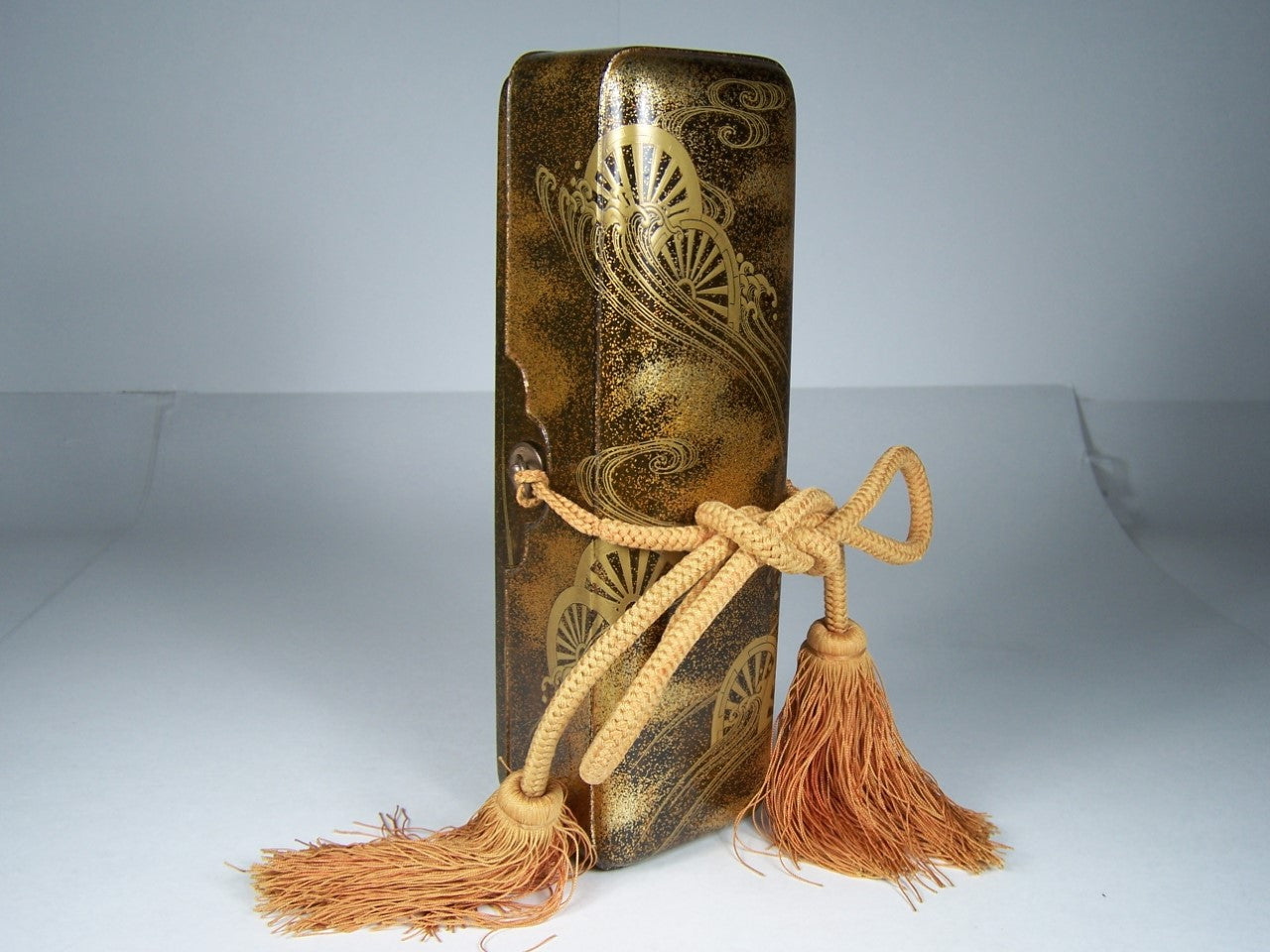
An antique Japanese lacquer fubako (document box) from the Edo period, featuring refined maki-e decoration with stylized wheel motifs across a richly developed nashiji ground. Elegant in scale and execution, this piece reflects the restrained sophistication of late Edo lacquer work and remains in exceptional condition with its original silk cord intact.
This Edo period fubako presents a particularly fine example of Japanese maki-e lacquer, distinguished by its softly modulated gold nashiji ground and fluid, asymmetrical composition. The design features stylized wheel forms—likely derived from genji-guruma (court carriage wheels)—interwoven with flowing lines that suggest water or wind, a classical visual language associated with movement, seasonality, and poetic reference.
The surface demonstrates a confident and controlled application of sprinkled gold, creating depth without heaviness. The composition wraps seamlessly across the lid and sides, allowing the design to unfold as the object is handled—an intentional and sophisticated aspect of lacquer design at this level.
The interior continues the nashiji treatment, an indication of quality beyond more utilitarian examples. The underside, protected when closed, retains particularly strong gold tone and minimal wear.
The form itself is quietly refined, with softened edges and balanced proportions typical of well-made Edo period boxes intended for personal correspondence or important papers. The original silk cord with tassels remains present—now gently faded with age—which adds to the authenticity and completeness of the piece.
MEASUREMENTS & NOTES
-
9.25" W × 2.75" D × 2.5" H
-
Japan, Edo period, circa 1800–1850
-
Maki-e lacquer with nashiji ground
-
Original silk cord and tassels present
Condition:
Excellent antique condition. Light, age-appropriate surface wear. Interior well preserved. Silk cord shows expected fading consistent with age.
📚 Collector’s Note
Fubako were used in Japan for storing documents, letters, and poetry papers, often associated with literate and courtly culture. Examples decorated in maki-e with nashiji grounds represent a higher tier of production, as both techniques require time-intensive application of gold powder across multiple layers of lacquer.
The wheel motif (genji-guruma) is a recurring element in Japanese decorative arts, often linked to Heian-period court culture and literary references, most notably The Tale of Genji. Its presence here, combined with flowing water-like forms, reflects a long-standing visual vocabulary associated with refinement, movement, and seasonal evocation.
The Principal’s Perspective
From an investment standpoint, this fubako represents a strong example of Edo period maki-e lacquer, a category that continues to hold steady collector demand. The well-preserved nashiji ground, combined with the presence of the original silk cord, places it above more commonly encountered examples, where such elements are often lost or compromised.
Condition is a key factor here. The surface retains a consistent and vibrant gold distribution, and the interior decoration confirms a higher level of production rather than a purely utilitarian object. These qualities position the piece within a more selective tier of the market, appealing to both established collectors and design professionals seeking authentic period lacquer.
As global interest in Japanese decorative arts continues to expand, finely executed Edo period lacquer with strong condition and completeness remains a stable and credible area of investment.
Share