June Hastings Collections
Chinese Elm Kang Daybed / Opium Couch, Ming Revival, Late Qing, c.1890–1920
Chinese Elm Kang Daybed / Opium Couch, Ming Revival, Late Qing, c.1890–1920
Couldn't load pickup availability
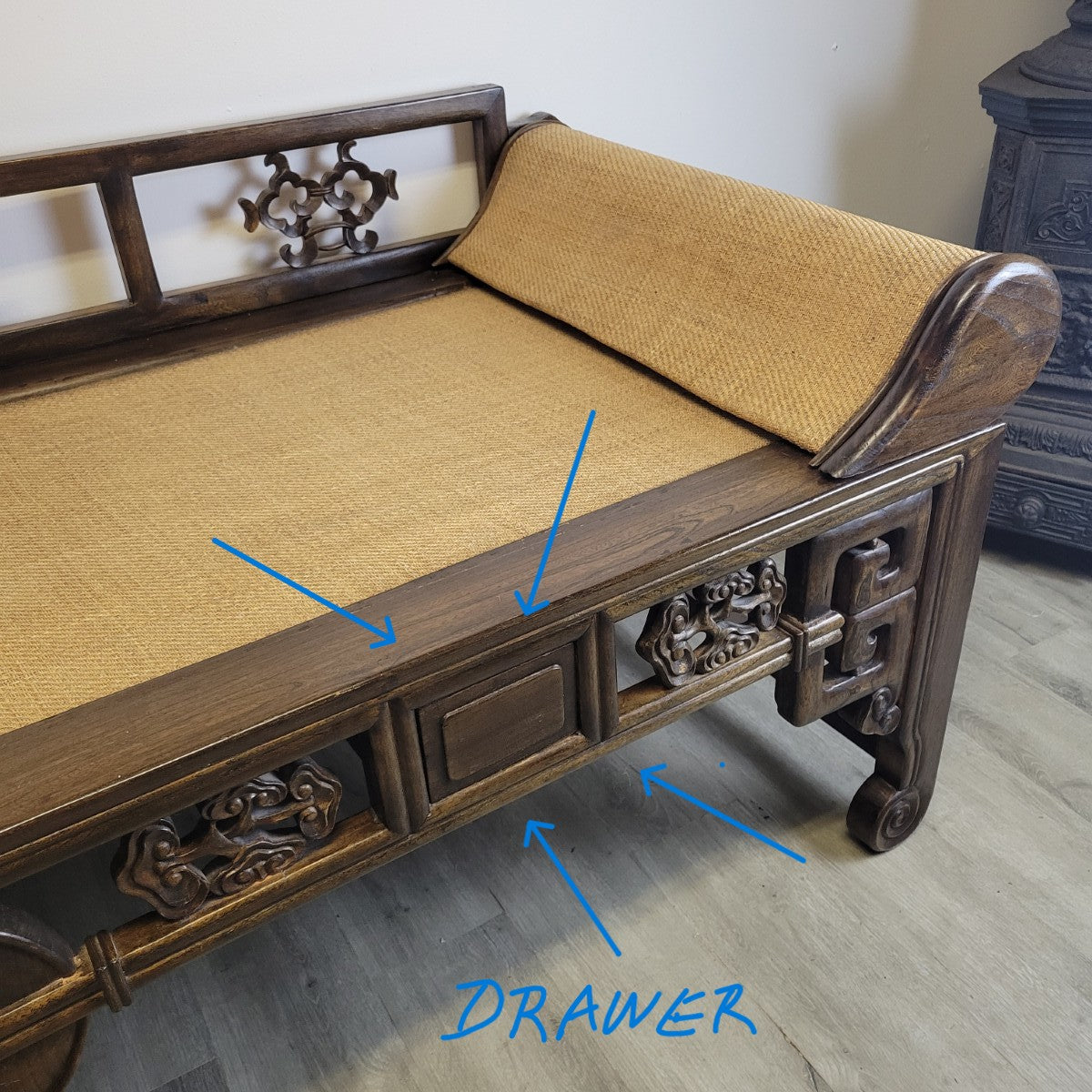
A finely carved Chinese elm kang daybed from northern China, likely Shanxi province, dating to the late Qing–early Republic period, circa 1890–1920. Executed in the Ming revival style, this piece features an openwork carved apron, circular coin medallion stretcher, inward scrolling feet, hidden drawers, and a woven mat seat over a solid plank platform—combining architectural presence with refined decorative detail.
This Chinese elm kang daybed, often referred to as an opium couch, reflects the enduring influence of Ming furniture traditions in northern workshop production during the late nineteenth and early twentieth centuries. The long rectangular platform is framed by a carved apron incorporating pierced openwork panels and centered by a circular coin medallion stretcher, an auspicious motif symbolizing prosperity.
The seat retains its woven mat surface laid over a structural plank base, offering both strength and visual lightness in keeping with traditional kang furniture design. Along the apron, two concealed drawers are seamlessly integrated into the carved framework—features associated with higher-quality examples and originally intended for storing personal or smoking accessories.
The back rail is fitted with pierced double-ruyi cloud carvings, while the end apron incorporates a stylized ruyi motif, reinforcing a decorative program rooted in auspicious symbolism. The inward scrolling feet, together with the balanced proportions and segmented apron construction, reflect a more refined workshop tradition often associated with northern Chinese merchant interiors.
Both functional and sculptural, the piece works equally well as a daybed, bench, or statement seating element within an interior.
The Principal’s Perspective
A well-resolved example of northern Chinese kang furniture from the late Qing–early Republic period, with features that place it above more typical examples—most notably the carved openwork apron, coin medallion stretcher, inward scrolling feet, and integrated concealed drawers.
Pieces of this type have seen steady demand from both designers and collectors, particularly those that combine strong form with clear regional character. Its scale, functionality, and sculptural presence allow it to move easily between decorative object and usable seating.
As an investment, this form occupies a stable position within the market—valued for its craftsmanship and adaptability, with continued relevance in both traditional and contemporary interiors.
Measurements & Details
Dimensions:
73ʺ W × 29ʺ D × 27ʺ H, seat height 20"
Origin: Northern China, likely Shanxi province
Date: circa 1890–1920
Wood: Chinese elm (yumu)
Seat: woven rattan mat over structural plank platform
Style: Ming revival / Late Qing
Features: carved openwork apron, circular coin medallion stretcher, concealed drawers, inward scrolling feet
Share