June Hastings Collections
Early 20th Century American Folk Art Star Pincushion Stool with Cattle Horn Base
Early 20th Century American Folk Art Star Pincushion Stool with Cattle Horn Base
Couldn't load pickup availability
An early 20th-century American folk art pincushion in sculptural stool form, featuring a hand-padded star-shaped textile top raised on naturally curved mounted cattle horns. Pieces like this embody the ingenuity of rural American craft, where domestic tools were often fashioned from materials close at hand.
Description
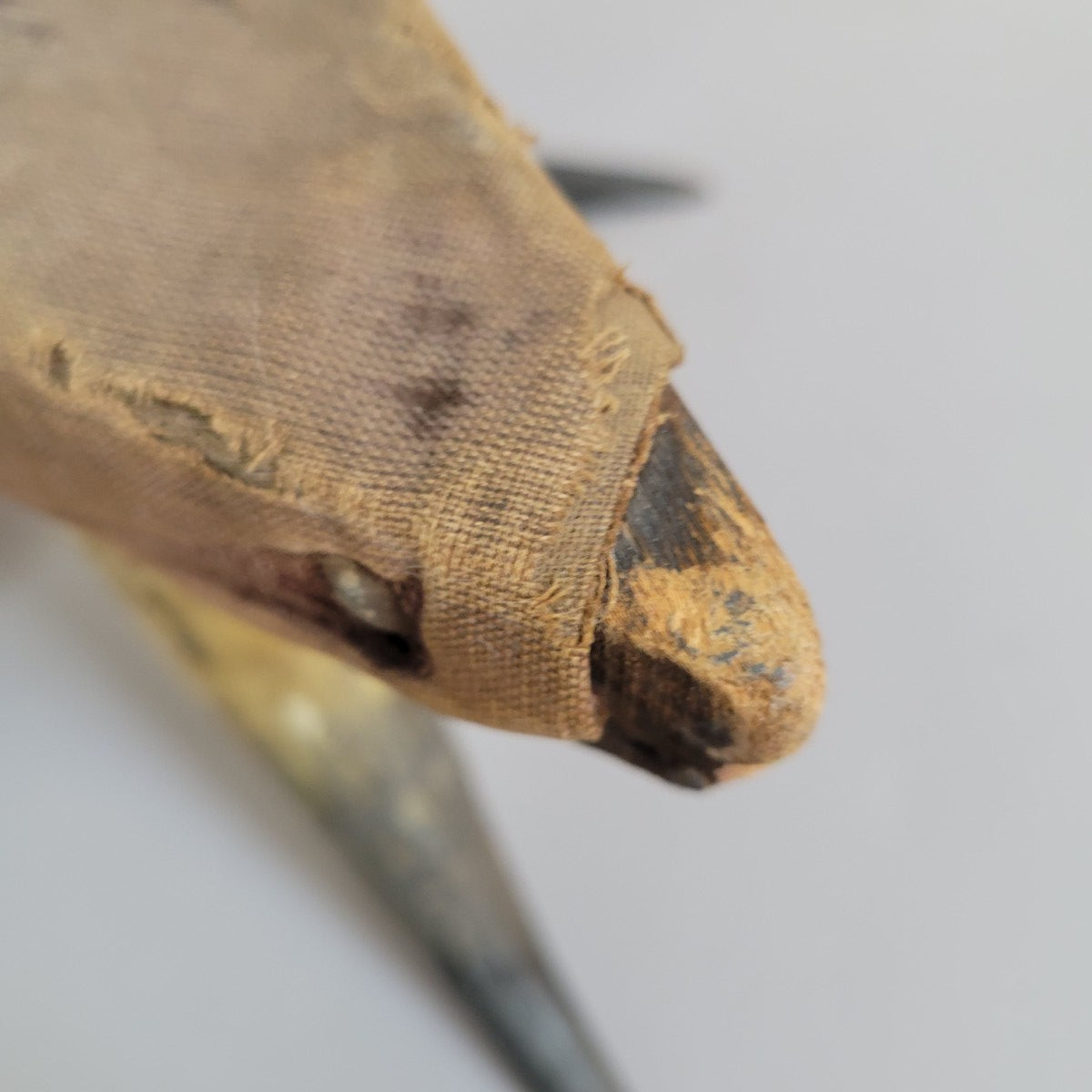
Compact yet visually striking, the piece combines sewing utility with the sculptural character of Western vernacular design. The five-point star cushion rests on four naturally curved cattle horns, carefully mounted to form a stable base. The juxtaposition of textile and horn gives the object a distinctive presence that reads as both practical tool and folk sculpture.
Originally used as a pincushion for sewing needles and pins, the form today functions best as a decorative tabletop object rather than a weight-bearing stool. Its worn textile surface and handmade construction preserve the honest character expected of authentic folk work.
Objects of this kind bring a strong sense of regional history and material culture to an interior. Displayed on a shelf, console, or tabletop, it introduces a small but memorable element of American vernacular craft into your home.
Measurements & Details
Height: 7.25 in
Width: 15 in
Depth: 15 in
Early 20th century
United States
Handmade textile star cushion mounted on cattle horn base
Wear to textile surface consistent with age and use
📚 Collector’s Note
Star-form pincushions appear in American folk traditions of the late 19th and early 20th centuries, particularly in rural communities where sewing remained an essential domestic skill. The star motif held both decorative and symbolic meaning within American visual culture, appearing in quilts, needlework, and household textiles throughout the period.
The use of mounted cattle horns places the object within regions shaped by ranching and livestock culture. Horn furniture and decorative objects were commonly produced in Western and frontier areas, where craftsmen adapted natural materials into functional household forms. Objects like this illustrate the ingenuity of vernacular craftsmanship, where practicality, regional identity, and individual expression intersect.
Share